

Affiliate marketing or starting a blog is one of the best things a student can do. It’s like starting a small business from your bedroom. But many stop before they start. They get stuck at the first step. They don’t know what to write. This is where you learn how to find your niche.
If you try to talk to everyone, you end up talking to no one. You need a specific friend to talk to. That’s what niche is. This is your special corner of the internet. In this guide, I’ll show you how to find your niche so you can start making money without spending a single dollar. We’ll keep it very simple, like we’re just hanging out.How to Make Money Online as a Teen: Easiest 3 Paths
Table of Contents
Introduction: The Power of the “Small”
What is a niche?
So, what is a niche? Let’s put it simply. A niche is a small part of a large market. Imagine a whole world of “sports”. It’s huge. A niche would be “table tennis for adults”. It is a certain piece of the pie. When you know how to find your niche, you choose the part you want to own. It helps you stand out.
The Library Analogy
Think of a huge library. There are books on all subjects. If you want to learn how to bake a chocolate cake, you don’t have to run around the house. You should go to the shelf labeled “Baking”.
The Internet is that library. Your blog is that shelf. If your blog has books on baking, fixing cars, and math, people will get confused. they will leave But if you have a “baking” shelf, everyone who wants cake will come to you. Learning how to find your niche is all about choosing the right shelf.
The “Why”: Why niching down is the secret to beating big competitors with zero budget.
You may worry that small things mean less people. But actually, this is the secret of victory. Big websites have millions of dollars. You can’t beat them by talking about “health”. The number of their authors is very high. AI Cash Hack Blueprint for Beginners with PLR Review
But if you talk about small things, you can be the best. Big websites don’t have time for small things. This is where you win. You don’t need money to lose them; You just have to be more specific. This is how you can grow on a zero budget.
Why is it important to choose a niche?
You might be wondering why it’s important to find your specialty? It seems easy to write about everything you love. But here are four simple reasons why it doesn’t work.
Resource efficiency
As a student, you are busy. You have classes and exams. You can’t spend all day writing ten different stories. When you know how to find your specialty, you save time. You study only one subject. you hurry It makes your life easier.
Authority formation
If your phone breaks, you go to a phone repair shop. You don’t go to a guy who fixes bikes and shoes. You want an expert. Online, people look for experts. If you only talk about one thing, then people will start believing you. Trust is what makes a blog successful.
Secrets of Algorithms
Computers run the Internet. Places like Google and YouTube love it when you stick to a topic. They call it “topical authority”. If you post a lot about “gardening,” Google thinks you’re a professional. Then, it exposes your site to more people for free. This is a huge secret to growth.
Reasons for money
Companies favor certain groups. If you talk about “budget laptops”, a computer company will want to advertise on your site. They know your readers want to buy. If you talk about everything, companies won’t know who’s reading. Some things are more important to you.
How many types of niche?
To figure out how to find your niche, you need to know what types of niches exist. So, how many types of niches can you choose from? Let’s look at six main points.
Broad niche
A broad niche is a huge topic. Examples are health, wealth, or technology.
Advantage: Has millions of readers.
Disadvantages: Competition is very high. Newbies almost never rank here because the big sites own these topics.
Sub Niche
A sub niche is a small part of a broader niche. Instead of “money”, you talk about “saving money for students”. This is very good. You’re still in a larger field, but you’re speaking to a specific group. This is a great place to start.
Micro niche
A micro niche is very focused. An example is “The Keto Diet for Vegan Athletes.” It is best for beginners. It’s very easy to rank because almost no one is doing it. People will trust you very quickly because you are very specific.
Problem-oriented niche
This niche is primarily for solving a pain. An example is “How to Stop Procrastination in College”. People always look for help when they have problems. If you answer them, they will follow you. This is a great way to build a loyal audience.
Product-based niches
This is to review everything. Example: “Best headphones for studying.” Finding things to write about is very easy. Every time a new product comes out, you have a new post. It is very easy to operate.
Hybrid niche
A hybrid niche is a mix of two different things. Like “Yoga for gamers”. It makes you very special. No one else is fixing what you’re doing. It helps you create a unique brand that lasts for a long time.
Which is best for you?
Choosing the right one can be tricky. But for most students, a micro niche or a problem-based niche is best. Why? Because you can start them for free. You don’t have to be much of an expert. You just need to stay one step ahead of your reader.
Find a topic you already know a little about. If you love playing guitar, you can start with “Best Guitar Songs for Beginners”. It’s easy, fun, and you already have the tools. This example is similar to how to find your niche.
Niche selecting arguments
As for how to find your niche, choosing a topic is a big choice for your future. Here are 10 niche-selection arguments you should think about as a student.
You have to live with this niche every day
You will write and think about it for a long time. If you choose something just for the money, but you hate it, you will quit. Choose something that makes you happy to open your laptop.
Your first niche is for learning, not for perfection
Don’t worry about choosing the “perfect” one. Your first blog is like a school project. You are learning how to create and write a site. It’s okay to change it later. just start
Interest trumps intelligence
You don’t have to be the smartest person in the room. If you are truly passionate about something, you will work harder. You will read more. That interest will make your blog better than someone who is just smart but boring.
Consistency is more important than profit at first
Don’t look at money for the first three months. Focus on posting every week. If you are consistent, the money will come. If you only look at profit, you will get sad and stop.
You should understand the pain, not the product
Don’t just talk about features. Talk about how the reader feels. If you understand why they are stressed or tired, you can help them. People follow those who understand them.
Smaller niches feel safer for beginners
Talking to a million people is scary. It’s easy to talk to a hundred. Small niches allow you to make mistakes and grow slowly. It feels much more comfortable.
Your niche matches your daily life
If you are a student, talk about what you see at school. If you like to cook dinner, talk about it. When your niche fits your life, it doesn’t feel like “work.” It just feels like sharing your day.
You don’t need to be an expert on day one
You can learn how to find your niche as you go! You can document your journey. People love to see someone grow. You need to be 5% more helpful than the person reading your blog.
Time is your greatest asset as a student.
You have time to try. You can try again if you fail. Older people are often too busy or afraid to take risks. Use this time to build something great as a child.
Confidence grows after work, not before.
You won’t feel “ready” to start. After writing five posts you will feel ready. Courage comes after taking action. So, take the first step today.
How to find your niche?
When you’re looking for ideas, you can look at three different types of categories.
Trending niche
These are topics that are “always popular” now. Like a new AI tool or a new game. You can grow very fast here. But beware, sometimes trends die fast. Catch the wave, but plan later.
Highest paying niche
These are areas where companies spend a lot of money. Finance, business and software are some examples. If you write here, you can earn more from ads and sponsors. But remember, the competition is also high.
Profitable niche
These are “evergreen” topics. They never go away. Health, relationships and making money are always popular. People always want to be happy and healthy. These are safe bets for the long
Niche Selection Process Using Tools (Serial List)
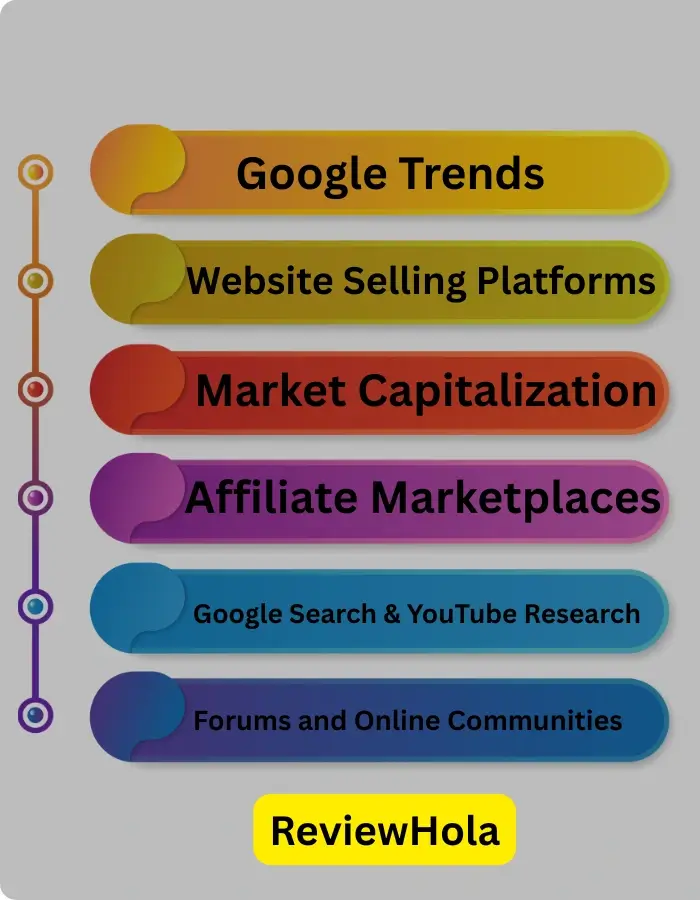
Now is the time to find your niche. You have an idea, but will it work? Use these six steps to make sure.
Google Trends
Go to Google Trends. Type your subject. Is the line rising or stagnant? it’s good If the line collapses, people are losing interest. You want a topic that people still care about.
Website sales platform
Check out sites like Flippa. Find blogs in your niche. Are people selling them for thousands of dollars? If yes, then it means the niche is making money. This is the “money proof” you need.
market capitalization
Is the art big? Find out how much money there is in that market. If it’s a billion dollar market, there’s room for you. A small slice of a big pie is a lot of money.
Affiliate Marketplace
Learn how to find your niche as a beginner. Check Clickbank & amazon product categories. Are there many products to sell in your niche? If there are many referrals, you can earn money through commissions. If there is no product, it will be difficult to earn.
Google Search and YouTube Research
Search your topic on Google and YouTube to learn how to find your niche. Who are the big players? Can you do anything different? Maybe they are too boring, and you can have fun. Find the “gap” they’re missing.
Forums and online communities
Visit Reddit or Quora to learn how to find your niche. What are people asking? If everyone has the same problem and no one has a good answer, then that’s your niche! Write the answer they are looking for.
Conclusion: Start Small, Think Big
The most important step in your blogging journey is finding your niche. It may seem a little difficult at first, but don’t let that stop you. Remember to start small. You don’t need a big team or a lot of money. You only need to help a certain group of people.
Learning to find your niche is like learning to ride a bicycle. Once you get it, you’ll never forget it. Don’t worry about being perfect right away. Choose something you like and start writing. The internet is waiting for your voice.
I really hope this guide helps you. You have everything you need to get started. Take a deep breath, pick your top three ideas and test them with tools tonight. You can do it, and I’m rooting for you! Happy blogging, friend!
Our next part, Traffic Drive
FAQ
Do I need to be an expert to start blogging in a niche?
Not at all! You just need to be curious and helpful. Think of yourself as a guide rather than a professor. If you are a student who just learned something new, you can teach the person who is one step behind you. People actually love learning from “real” people more than experts sometimes, because you understand their current struggles.
What if I pick a niche and then I get bored of it?
This happens to the best of us! That is why I suggest starting with a “Micro-Niche” or a “Beta Test.” If you get bored after a few months, you can slowly pivot or change your focus. The skills you learn (writing, SEO, and research) will stay with you even if you change your topic.
Is it possible to find a niche with zero competition?
To be honest, no. If a niche has zero competition, it usually means there is no money there. Competition is actually a good sign! It means people are interested and spending money. Your goal isn’t to find a niche with no competition, but to find a “gap” where you can do things better or differently than others.
How much time should I spend researching how to find my niche?
Don’t get stuck in “analysis paralysis.” Give yourself about a week to do the research I mentioned in this guide. Use the tools, check the numbers, and then make a choice. It is better to start a “good” niche today than to wait six months for a “perfect” niche that might not exist.
Can I have more than one niche on one blog?
If you are a beginner, I highly recommend sticking to one niche. If you talk about cooking, travel, and gaming all at once, Google will have a hard time understanding what your site is about. Once you are successful and have a lot of traffic, you can think about adding more topics, but keep it simple at the start.
How do I know if my niche will actually make money?
The easiest way is to use the “Money Proof” step. Go to Amazon or an affiliate network. If you see products related to your topic that people are buying, you are in a good spot. Also, if you see ads on Google for your keywords, it means companies are paying to be there. That’s a great sign for you!

Comments are closed.